

GLP-1 Weight Loss Guide
Does Tirzepatide Cause Muscle Loss?
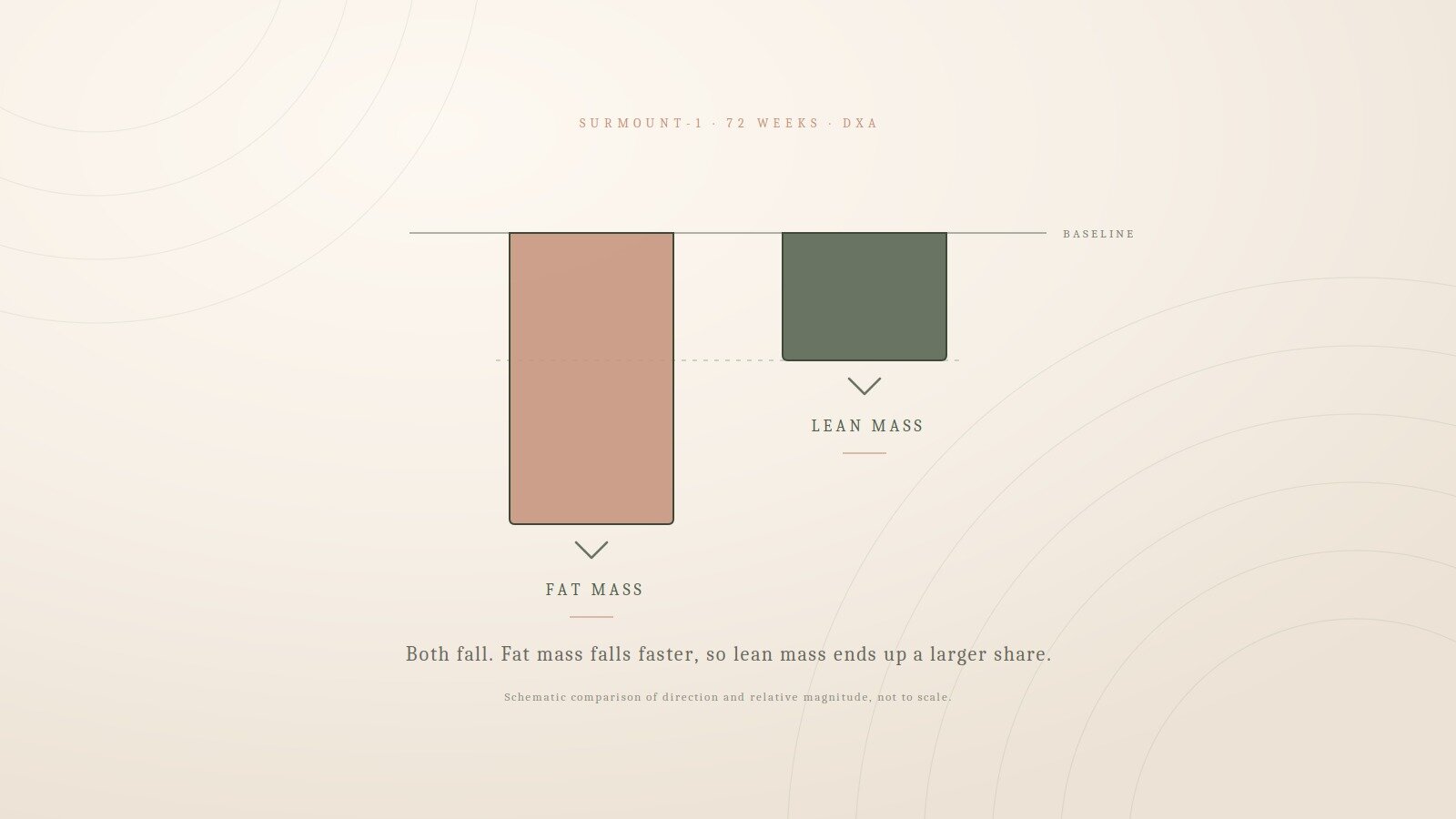
Yes. Some of the weight lost on tirzepatide is lean mass rather than fat. Muscle loss is expected during any large weight loss, and how much lean mass you keep depends on what you do while taking tirzepatide.
Key Takeaways on Tirzepatide and Muscle Loss
- Tirzepatide muscle loss is real and expected, and it is not the drug harming muscle
- In the SURMOUNT-1 substudy, fat mass fell faster than lean mass in every age group
- Lean mass ends up a larger share of your body than it was at the start
- Protein intake, resistance training, and dose pace change the outcome
- A scale cannot tell fat from muscle, so body composition testing matters
Find Out What Tirzepatide Is Doing to Your Body Composition
Trial averages describe groups. A baseline body composition scan shows what is happening to you.
Does Tirzepatide Cause Muscle Loss? What the Trial Data Shows
The SURMOUNT-1 body composition substudy measured lean mass directly with a DXA scan instead of guessing from scale weight. Substudy participants lost 21 to 22 percent of their body weight over 72 weeks of tirzepatide treatment.
How Much Muscle Do You Lose on Tirzepatide?
Their fat-to-lean ratio dropped by 0.25, against a placebo range of 0.03 to 0.14. A falling ratio means fat mass left the body faster than lean mass did. Published estimates of the lean share of total weight lost vary between analyses, so treat any single percentage with caution and ask which trial produced it.
Key parameters of the body composition substudy:
- 160 participants with DXA scans at baseline and afterward
- 72 weeks of tirzepatide treatment
- Age groups of 99 patients under 50, 41 aged 50 to 64, and 20 aged 65 and older
- Fat-to-lean ratio improved in all three age groups, though the oldest group was small
Why the Measurement Method Matters
Body composition figures quoted online differ widely, and the trial named is often not the trial the number came from. Some figures come from semaglutide studies. Bathroom scales estimate body fat from body water, which shifts during rapid weight loss. A DXA scan measures fat mass and lean mass directly.
Why Tirzepatide Muscle Loss Happens During Weight Loss
Tirzepatide muscle loss is not caused by the drug attacking muscle. No trial has shown that tirzepatide damages muscle tissue. Lean mass falls because of a large, sustained calorie deficit, and three things drive it.
A Steep Calorie Deficit
Tirzepatide activates both the GIP and GLP-1 receptors, which reduces appetite considerably. When you eat far less than you burn for months, your body breaks down both body fat and skeletal muscle for fuel. Steeper calorie deficits pull more from lean mass, which is why tirzepatide dose pace matters as much as the final dose.
Protein Intake Falls
Eating less usually means eating less protein, and protein-rich foods are filling and slow to digest. They become unappealing when the stomach empties more slowly. Skeletal muscle is rebuilt from dietary protein, so muscle mass is lost faster than it is replaced when protein intake drops.
You Move Less
Nausea, fatigue, and low energy reduce how often people train. Skeletal muscle that is not worked regularly shrinks, with or without tirzepatide, and doing less rarely feels like a decision.
What Tirzepatide Lean Mass Data Actually Shows
Lean mass is not only muscle. It includes organs, bone, connective tissue, and body water. A smaller body needs less of each, so losing lean mass during a 22 percent weight loss is normal remodeling rather than muscle wasting.
Lean Mass Rises as a Share of Body Weight
Because the fat-to-lean ratio falls, lean mass makes up a larger percentage of your body after treatment than before. Body composition improves even while absolute tirzepatide lean mass declines. Scale weight cannot show this, and neither can a percentage quoted without its denominator.
Why Muscle Is Worth Protecting
Skeletal muscle drives your resting metabolic rate, helps manage blood sugar, and keeps you strong. Protecting muscle mass protects the metabolic rate that holds weight off after treatment ends, and it protects mobility as you age.
Know Where You Sit in That Range
Some patients lose far more lean mass than the tirzepatide trial average, and only body composition analysis shows which group you are in.
Tirzepatide vs Semaglutide Muscle Loss
Both drugs show the same body composition pattern: fat mass falls faster than lean mass, and body composition improves overall. The two body composition substudies reported their results differently, so the numbers below are not directly comparable.
| Measure | Tirzepatide (SURMOUNT-1) | Semaglutide (STEP 1) |
|---|---|---|
| Mechanism | GIP and GLP-1 receptor agonist | GLP-1 receptor agonist |
| Substudy | 160 patients, DXA, 72 weeks | 140 patients, DXA, 68 weeks |
| Reported ratio change | Fat-to-lean fell 0.25 | Lean-to-fat rose 0.23 from 1.34 |
| Lean share of body mass | Improved in all age groups | Rose 3.0 percentage points |
| Fat mass change | Fell faster than lean tissue | Fell 19.3 percent |
| Direct muscle toxicity | None demonstrated | None demonstrated |
Switching Drugs Does Not Protect Muscle
Patients often ask whether semaglutide is gentler on muscle. Neither substudy supports switching for that reason, since both substudies show fat mass falling faster than lean mass, and lean mass rising as a share of body weight. Neither drug protects skeletal muscle on its own. The preservation strategy decides the outcome.
How to Prevent Muscle Loss on Tirzepatide
Four things change the result. They work together, and doing one of them gets you part of the way.
Eat Enough Protein to Prevent Tirzepatide Muscle Loss
Clinics commonly target 1.2 to 1.6 grams of protein per kilogram of ideal body weight daily, spread across meals at 25 to 40 grams each. Spreading protein out matters, because muscle responds to the protein in each meal rather than the daily total. Smaller protein-forward meals also sit better when digestion slows. Your physician should set your target.
Lift Weights Twice a Week
Resistance training tells your muscle to hold on to tissue while you are in a calorie deficit. Two sessions a week covering the major muscle groups, at 8 to 12 repetitions with the weight going up over time, is the pattern used in most weight-loss programs. Walking and cardio are good for your heart but do not send this signal.
Match the Dose to What Your Body Is Doing
Faster dose increases mean faster weight loss and a steeper calorie deficit. Physician-directed dose titration slows the schedule when lean mass falls quicker than expected, which a fixed monthly increase cannot do. Holding a dose longer is a clinical decision, not a setback.
Measure Body Composition, Not Body Weight
A scale cannot separate fat mass from muscle mass. Repeat body composition testing sets a baseline before your first tirzepatide dose and tracks lean mass through treatment. Without that baseline, later scans show a snapshot instead of a trend.
Build Your Protocol Against Muscle Loss on Tirzepatide
Protein targets, training plans, and dose decisions are personal, and a physician can set all three against your own baseline numbers.
When Zepbound Muscle Loss Needs Medical Review
Losing some lean mass is expected. Losing muscle strength and function is not. Zepbound muscle loss needs a clinical look when it shows up as symptoms rather than numbers.
Signs Worth Raising With Your Physician
- New falls, unsteadiness, or trouble getting out of a chair
- Weakness that gets in the way of daily activities
- Losing more than 10 percent of your body weight in six months without meaning to
- Grip strength or walking speed dropping along with weight
- Signs of poor nutrition, including thinning hair and constant fatigue
An assessment usually covers grip strength, walking speed, blood work, and a metabolic evaluation. Thyroid function, vitamin D, and B12 all affect how well muscle holds up during weight loss.
Get Symptoms Checked Before They Become Setbacks
Symptoms during treatment can come from dosing, nutrition, or something unrelated, and telling them apart takes an examination.
FAQ: Tirzepatide and Muscle Loss
Does tirzepatide cause muscle loss at lower doses?
Lean mass loss tracks how much weight you lose, not the tirzepatide dose by itself. Lower doses mean slower weight loss and a smaller calorie deficit, so less lean mass is lost over the same period. Body composition data show a similar pattern across dose groups, so a lower dose changes the pace rather than the proportion.
Is muscle lost on tirzepatide permanent?
Muscle can be rebuilt afterward with resistance training and enough protein. Rebuilding muscle takes longer than the loss did, and it is slower for older patients. Protecting muscle during treatment is easier than replacing it later.
Can you build muscle while taking tirzepatide?
Building muscle mass during a sustained calorie deficit is difficult and uncommon. Patients new to resistance training sometimes gain a little early, and those on a maintenance dose have more room to do so. During active weight loss, keeping the muscle mass you have is the realistic goal.
Review Your Muscle Preservation Plan With a Physician
Nivaan Health physicians visit patients at home for testing and body composition tracking, so tirzepatide dosing decisions rest on measurement rather than guesswork.
This article is for information only and is not medical advice. Talk to a licensed physician who knows your medical history before changing any medication, dose, nutrition plan, or exercise routine.


